BAS 108
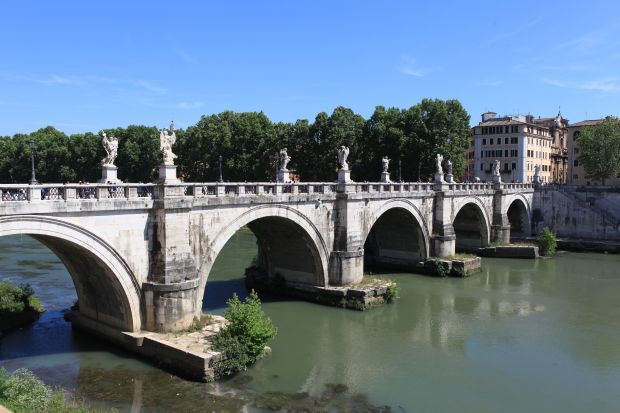
Ponte Sant'Angelo - Angel Bridge
12.05.2012
© Frank Sellke / brueckenweb.de
 Use in accordance with the terms and conditions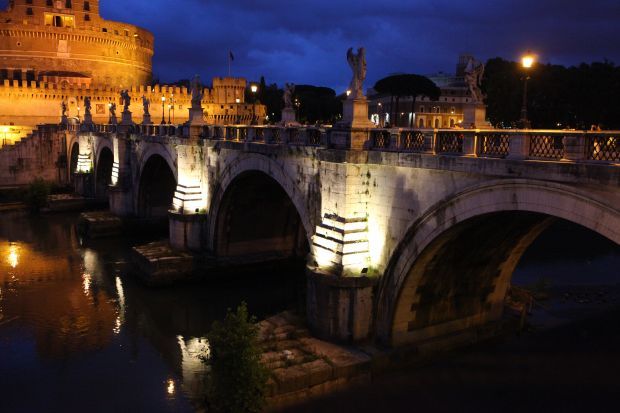
13.05.2012
© Frank Sellke / brueckenweb.de
Use in accordance with the terms and conditions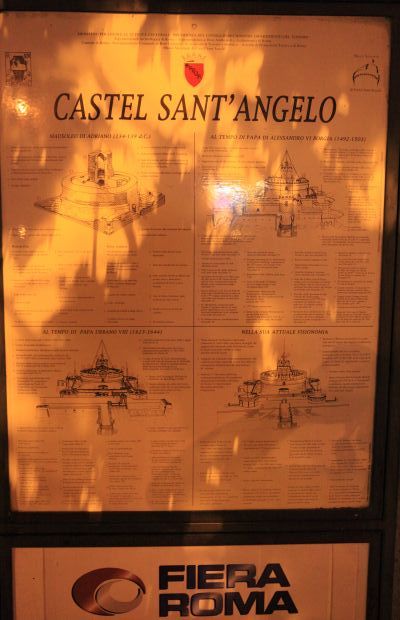
13.05.2012
© Frank Sellke / brueckenweb.de
Use in accordance with the terms and conditionsItaly
Latium
Rome
at Hadrian's Castle
Tevere/Tiber
Street
Arch bridge, arch under the roadway
Stone
136 n. Chr. ( oder 143 n.) Figuren aus dem 17. Jh
18.00 m
130.00 m
9.00 m
0.00 m
0.00 m
0.00 m2
in operation
here originally Pons Aelius
The figures on the Ponte Sant'Angelo are by Bernini; they symbolize Rome's transformation from the Roman Empire to Christianity.Information from Pavel Rypar:
5 arches, the 3 central ones are of ancient origin, the two side ones were built in 1892. Bernini and his assistants created 10 angel statues for the bridge between 1660 and 1667.
The Ponte Sant'Angelo in Rome is one of the most important structures in the ancient and Baroque architectural history of Italy. Originally built in 134 AD under Emperor Hadrian, it initially served as a connection between the Campus Martius and the emperor's newly built mausoleum, now known as Castel Sant'Angelo. The bridge's original name was Pons Aelius, named after Hadrian's family name. Architecturally, the Ponte Sant'Angelo is a classic Roman arched bridge with five voussoirs spanning the Tiber River. Its builder was likely Messius Rusticus, who constructed the bridge between 130 and 134 AD. In antiquity, the bridge was considered one of the most beautiful of its time and a masterpiece of Roman engineering. In the 17th century, the Ponte Sant'Angelo was fundamentally redesigned under Pope Clement VII by the famous sculptor Gian Lorenzo Bernini and his workshop. Bernini added ten Baroque angel figures to the bridge, bearing the instruments of Christ's Passion and considered a symbolic link between heaven and earth. These sculptures are among the most important works of the Italian Baroque and give the bridge its distinctive character today. In addition to the angel figures, statues of the apostles Peter and Paul, also from Bernini's workshop, adorn the bridge.Karte wird geladen …