BAS 129741
Ribchester Bridge
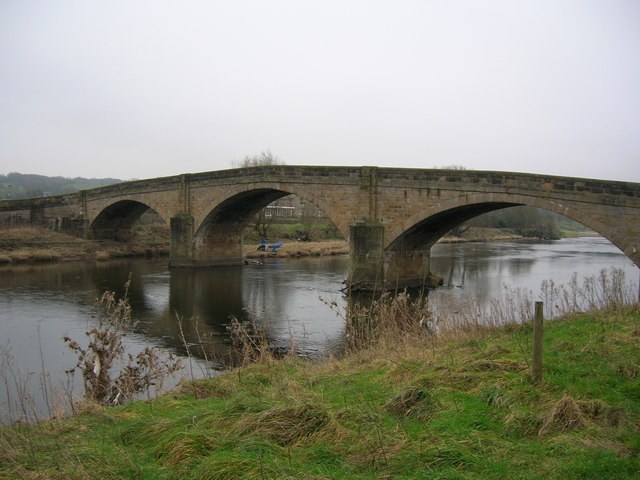
Ribchester Bridge
15.11.2026
© John Darch / CC BY-SA 2.0 / Wikimedia Commons
 Use only on request
Keine weiteren Bilder verfügbar
United Kingdom
England
Clayton-le-Dale, Lancashire
River Ribble
Road B6245 (Ribchester Road)
Arch bridge, arch under the roadway
Stone
1774
23.20 m
71.80 m
0.00 m
0.00 m
0.00 m
0.00 m2
in operation
The Ribchester Bridge is a toll-free, three-arched bridge over the River Ribble near Ribchester, Lancashire, England. This Grade II listed structure is located approximately 1.21 km east of the village and spans the river between the parishes of Clayton-le-Dale and Dutton. The bridge carries the two-lane B6245 Ribchester Road.
It was probably built in 1774 and is constructed of sandstone. Three segmental arches rest on triangular breakwaters. A cornice and a solid railing complete the bridge. It is 71.8 meters long and 6.8 meters wide (roadway plus a 300 mm wide parapet). The central span is the largest, with a length of 23.2 meters and a clearance of 5.5 meters. The other spans are somewhat smaller.
This point on the river lies above the tidal range, with the banks approximately 27 meters above sea level. It has been an important crossing for millennia, guarded by the Roman fort built here; however, the origin of the oldest bridge is uncertain. The predecessor of the current bridge was built in 1669. William Stukeley described it in his 1721 "Itinerarium Curiosum" as "a handsome bridge with four very large arches," about 800 meters upstream from Ribchester. The county council must have been aware of the problems, because bids were solicited for its reconstruction in 1769, but it collapsed during a flood in 1772. This bridge, too, had replaced another, the age of which is unknown. A charter from 1354 authorized the construction of a bridge of wood or stone across the river at a place called "Madynford" and also granted land to the ferryman. However, this location may have been considerably further downstream, near Osbaldeston Hall, where a ferry service was documented as late as the mid-19th century.
Karte wird geladen …