brueckenweb-logo
discover
Icon
bridges
Icon
bridge search
Icon
nearby
Icon
most bridges records
Icon
disasters
Icon
country overview
Icon
collections
Icon
articles
Icon
bridge news
Icon
literature
Icon
store
Icon
Icon
pinboard
Icon
Icon
clubinfo
join in
only for registered club members
administrate
only for registered club members

    1999 - 2026 © Frank Sellke / brueckenweb.de

    Icons by Icons8.com

    Version 5.1.16

    Legal Notice | Privacy Policy | ⚠️ Vertrag widerrufen

    BAS 4382
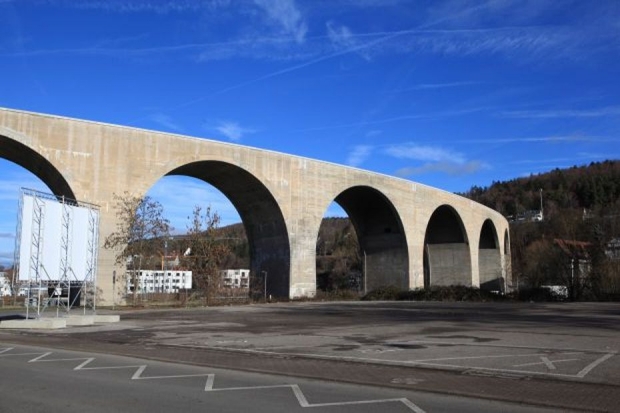
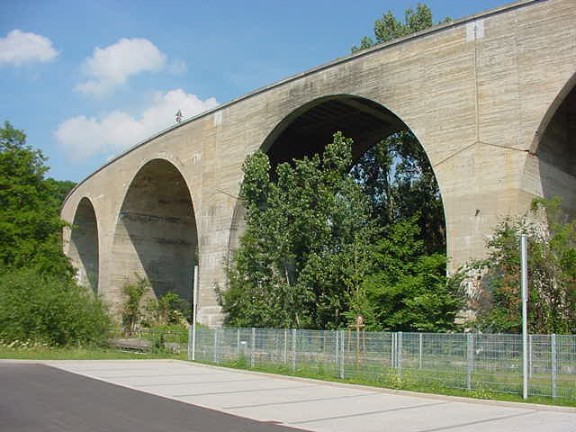
    Nagoldviadukt
    Brückenbild

    26.06.2002

    © Johannes Michalowsky
    (Homepage: http://michalowsky.de.vu)

    verboten / prohibitedNo other use permitted
    Bild 1

    13.12.2015

    © www.brueckenweb.de / Frank Sellke

    gegen Entgeld / for a feeUse in accordance with the terms and conditions
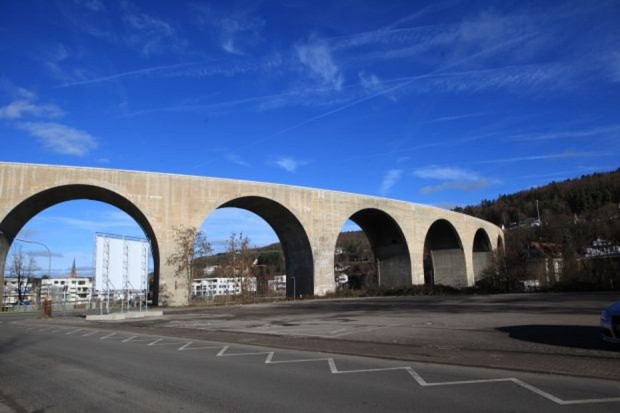
    Bild 2

    13.12.2015

    © www.brueckenweb.de / Frank Sellke

    gegen Entgeld / for a feeUse in accordance with the terms and conditions
    To Bridge Images
    Germany
    Baden-Württemberg
    Nagold
    in the District of Calw, East of the village
    B 463 Highway, Goethe Street, island Hauser and the whale Creek
    B28 main road
    15 Fields - arch bridge under the roadway
    Concrete
    1938-1954
    0.00 m
    0.00 m
    0.00 m

    A map is loading

    Timeline

    Loading timeline...

    Tags

    Loading tags ...

    Editing is available for members (midgr >= 6).

    News

    Lade Nachrichten ... loading news ...

    Links

    Loading links ...

    Literature

    Loading literature ...

    Collectibles

    Loading collectibles ...

    Videos

    Loading videos ...

    Documents

    Loading documents ...

    0.00 m
    0.00 m
    0.00 m2
    in operation

    The bridge over the Waldach River is now one of the landmarks of the town of Nagold. It consists of 17 round arches.
    Construction began in 1938, but was interrupted by World War II. The bridge was not completed until 1954.
    The first foundations, piers, and round arches were built of solid concrete, as steel was already used exclusively in the armaments industry at that time. In 1953, further construction began using reinforced concrete. The new piers are hollow inside, and some of their reinforced concrete walls are only 40 centimeters thick. The bridge's lower dead weight made a much simpler foundation possible. The total construction cost in 1953/54 was two million marks. The bypass did not lead to the urbanization of the city center, as many retailers feared. In 2009/2010, extensive concrete repairs were required on the viaduct. ```