BAS 6096
Old London Bridge
20.07.2019
© www.brueckenweb.de / Frank Sellke
 Use in accordance with the terms and conditions
Keine weiteren Bilder verfügbar
United Kingdom, Great Britain
England, Greater London
London
Thames
Street
Arch bridge, arch under the roadway
Stone
1176-1209
0.00 m
0.00 m
0.00 m
0.00 m
0.00 m
0.00 m2
in operation
Wikipedia:
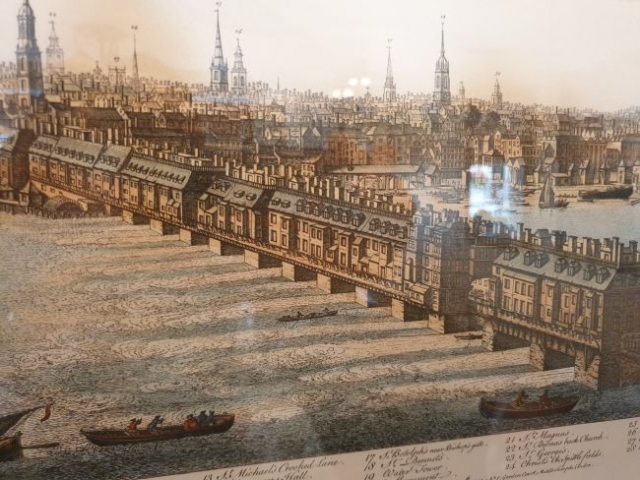
After the previous bridge was destroyed by fire in 1136, the clergyman responsible for its maintenance, Peter de Colechurch, proposed replacing the wooden bridge with a more permanent stone structure. Construction of the bridge began in 1176 during the reign of Henry II, under the supervision of Peter de Colechurch. The stone bridge piers were placed on ovals filled with stone; the ovals rested on foundations made of logs driven into the riverbed and were surrounded by breakwaters to protect them from erosion by the enormous tides. This was a novel construction at the time. After 33 years, four years after de Colechurch's death in 1205, the structure was opened in 1209 during the reign of King John Lackland. The medieval bridge consisted of 19 small, irregular pointed arches and a larger passageway with a drawbridge; the bridge was six meters wide and 273 meters long. Its distinctive structural segments were the city-facing north gate (New Stone Gate) above the second pier, and the Drawbridge Gate with a guardhouse on each side on the seventh pier. The latter was originally built as a wooden gate with twin towers (1209), then in 1426 as a stone double gate with four integrated round corner towers. In addition, there was a chapel on the eleventh, larger pier with a crypt accessible from the river (served as the tomb of its builder, Peter de Colechurch). The chapel was dedicated to Thomas Becket and renovated between 1384 and 1397. The south gate (Great Stone Gateway or Great Stone Gate), similar to the Drawbridge Gate, was located at the Southwark end of the bridge. King John had the idea of building rented houses on the bridge. Soon after, shops and residential buildings sprang up. Contemporary pictures show the bridge with buildings up to seven stories high. The population was so large that until the 18th century, the bridge was considered a separate borough with its own borough council. In 1381, the Wat Tyler Revolt was put down on the bridge, and in 1390, a jousting tournament was held. Due to the small size of the arches and the breakwaters at the bases of the piers, 80 percent of the river was dammed. This created a water level difference of approximately two meters between the two sides of the bridge, resulting in strong currents and whirlpools. The current was used to power waterwheels beneath the outer arches of the bridge. In 1582, with permission from the City Council, Peter Morris built two huge waterwheels beneath the northern arch to power water pumps, supplying London with piped water from the Thames for the first time. Later, two more waterwheels were installed beneath the second arch. In 1591, two waterwheels were installed at the southern end to power corn mills. Because of the rapid current and narrow passage, it was considered dangerous and difficult to navigate a boat under the bridge without scraping or colliding with the breakwaters. This practice was called "shooting the bridge". Many drowned, so passengers disembarked upstream at "The Three Cranes" and re-boarded downstream at Billingsgate. A saying at the time stated that the bridge was "for wise men to pass over, and for fools to pass under".[1] Several bridge arches collapsed over time. Houses were burned down during the Peasants' Revolt of 1381 and the Jack Cade Rebellion of 1450.
The northern gate, the New Stone Gate, a massive twin-towered gate overlooking the bridge, was gradually incorporated into the houses. The Drawbridge Gate, an even larger, rectangular double gate with round towers integrated into its four corners, was nicknamed Traitor's Gate until 1577, even before the gate in the Tower, and also served as a display for the heads and other body parts of convicted traitors, placed on wooden poles and spikes. It was replaced in 1577 under Elizabeth I by Nonsuch House (House of Many Windows), in the style of the other houses, as a half-timbered gate with four corner towers, and the drawbridge by a solid wooden bridge. The special thing about this house was that it was made entirely of wood without metal nails. It was constructed in Flanders, transported to London in segments, and assembled and installed on the bridge with wooden dowels. Thus, at the behest of Elizabeth I, the southern gate (the Great Stone Gateway), with its unobstructed, free-standing front, became Traitor's Gate, London's most infamous landmark. The heads of traitors were initially displayed on the drawbridge gate in 1305, during the reign of Edward I, usually impaled on wooden poles and tarred to prevent rapid decomposition, for every Londoner to see. The first head to be displayed was that of the Scottish national hero William Wallace. A tradition lasting more than 350 years developed from this. This custom only ended in 1660 at the behest of King Charles II after his restoration to power, because the heads reminded him too strongly of the execution of his father, Charles I. The last head to be placed on the south gate belonged to William Stayley, a goldsmith convicted of high treason. He had issued death threats against the king, was sentenced to death, quartered, and beheaded. His head and body, already buried at the request of his family, were exhumed by order of the king because of the highly provocative funeral and scattered among the gates and London Bridge (head). Other famous heads on poles included those of Wat Tyler (1381), Jack Cade (1450), Thomas More, whose head was stolen from there by his daughter, Bishop John Fisher (1535), Thomas Cromwell, 1st Earl of Essex (1540), and Guy Fawkes (1606) and his fellow conspirators. A German traveler counted over 30 heads on the bridge in 1595. The buildings on the bridge posed a great fire hazard. In 1212 or 1213, a devastating fire broke out simultaneously at both the north and south ends, trapping people. More than 3,000 people are said to have died. Another fire destroyed the northern third in 1633. This meant, however, that the Great Fire of 1666 did not spread to the bridge, as this section had since been replaced with a stone structure. By 1722, traffic on the bridge had become so excessive that the Lord Mayor issued an order requiring all carriages and wagons heading from Southwark to travel on the west side of the bridge, and all carriages leaving the city to travel on the east side. This may have been the origin of left-hand traffic in England. In 1725, a fire destroyed the buildings at the south end, including the South Gate, which was pulled down in 1727. In 1756, an Act of Parliament was passed for the utter demolition of all buildings. Between 1758 and 1762, all the houses were demolished (Nonesuch House in 1757, the North Gate in 1761), and the two central arches were replaced by a single arch to facilitate navigation on the river.
After the previous bridge was destroyed by fire in 1136, the clergyman responsible for its maintenance, Peter de Colechurch, proposed replacing the wooden bridge with a more permanent stone structure. Construction of the bridge began in 1176 during the reign of Henry II, under the supervision of Peter de Colechurch. The stone bridge piers were placed on ovals filled with stone; the ovals rested on foundations made of logs driven into the riverbed and were surrounded by breakwaters to protect them from erosion by the enormous tides. This was a novel construction at the time. After 33 years, four years after de Colechurch's death in 1205, the structure was opened in 1209 during the reign of King John Lackland. The medieval bridge consisted of 19 small, irregular pointed arches and a larger passageway with a drawbridge; the bridge was six meters wide and 273 meters long. Its distinctive structural segments were the city-facing north gate (New Stone Gate) above the second pier, and the Drawbridge Gate with a guardhouse on each side on the seventh pier. The latter was originally built as a wooden gate with twin towers (1209), then in 1426 as a stone double gate with four integrated round corner towers. In addition, there was a chapel on the eleventh, larger pier with a crypt accessible from the river (served as the tomb of its builder, Peter de Colechurch). The chapel was dedicated to Thomas Becket and renovated between 1384 and 1397. The south gate (Great Stone Gateway or Great Stone Gate), similar to the Drawbridge Gate, was located at the Southwark end of the bridge. King John had the idea of building rented houses on the bridge. Soon after, shops and residential buildings sprang up. Contemporary pictures show the bridge with buildings up to seven stories high. The population was so large that until the 18th century, the bridge was considered a separate borough with its own borough council. In 1381, the Wat Tyler Revolt was put down on the bridge, and in 1390, a jousting tournament was held. Due to the small size of the arches and the breakwaters at the bases of the piers, 80 percent of the river was dammed. This created a water level difference of approximately two meters between the two sides of the bridge, resulting in strong currents and whirlpools. The current was used to power waterwheels beneath the outer arches of the bridge. In 1582, with permission from the City Council, Peter Morris built two huge waterwheels beneath the northern arch to power water pumps, supplying London with piped water from the Thames for the first time. Later, two more waterwheels were installed beneath the second arch. In 1591, two waterwheels were installed at the southern end to power corn mills. Because of the rapid current and narrow passage, it was considered dangerous and difficult to navigate a boat under the bridge without scraping or colliding with the breakwaters. This practice was called "shooting the bridge". Many drowned, so passengers disembarked upstream at "The Three Cranes" and re-boarded downstream at Billingsgate. A saying at the time stated that the bridge was "for wise men to pass over, and for fools to pass under".[1] Several bridge arches collapsed over time. Houses were burned down during the Peasants' Revolt of 1381 and the Jack Cade Rebellion of 1450.
The northern gate, the New Stone Gate, a massive twin-towered gate overlooking the bridge, was gradually incorporated into the houses. The Drawbridge Gate, an even larger, rectangular double gate with round towers integrated into its four corners, was nicknamed Traitor's Gate until 1577, even before the gate in the Tower, and also served as a display for the heads and other body parts of convicted traitors, placed on wooden poles and spikes. It was replaced in 1577 under Elizabeth I by Nonsuch House (House of Many Windows), in the style of the other houses, as a half-timbered gate with four corner towers, and the drawbridge by a solid wooden bridge. The special thing about this house was that it was made entirely of wood without metal nails. It was constructed in Flanders, transported to London in segments, and assembled and installed on the bridge with wooden dowels. Thus, at the behest of Elizabeth I, the southern gate (the Great Stone Gateway), with its unobstructed, free-standing front, became Traitor's Gate, London's most infamous landmark. The heads of traitors were initially displayed on the drawbridge gate in 1305, during the reign of Edward I, usually impaled on wooden poles and tarred to prevent rapid decomposition, for every Londoner to see. The first head to be displayed was that of the Scottish national hero William Wallace. A tradition lasting more than 350 years developed from this. This custom only ended in 1660 at the behest of King Charles II after his restoration to power, because the heads reminded him too strongly of the execution of his father, Charles I. The last head to be placed on the south gate belonged to William Stayley, a goldsmith convicted of high treason. He had issued death threats against the king, was sentenced to death, quartered, and beheaded. His head and body, already buried at the request of his family, were exhumed by order of the king because of the highly provocative funeral and scattered among the gates and London Bridge (head). Other famous heads on poles included those of Wat Tyler (1381), Jack Cade (1450), Thomas More, whose head was stolen from there by his daughter, Bishop John Fisher (1535), Thomas Cromwell, 1st Earl of Essex (1540), and Guy Fawkes (1606) and his fellow conspirators. A German traveler counted over 30 heads on the bridge in 1595. The buildings on the bridge posed a great fire hazard. In 1212 or 1213, a devastating fire broke out simultaneously at both the north and south ends, trapping people. More than 3,000 people are said to have died. Another fire destroyed the northern third in 1633. This meant, however, that the Great Fire of 1666 did not spread to the bridge, as this section had since been replaced with a stone structure. By 1722, traffic on the bridge had become so excessive that the Lord Mayor issued an order requiring all carriages and wagons heading from Southwark to travel on the west side of the bridge, and all carriages leaving the city to travel on the east side. This may have been the origin of left-hand traffic in England. In 1725, a fire destroyed the buildings at the south end, including the South Gate, which was pulled down in 1727. In 1756, an Act of Parliament was passed for the utter demolition of all buildings. Between 1758 and 1762, all the houses were demolished (Nonesuch House in 1757, the North Gate in 1761), and the two central arches were replaced by a single arch to facilitate navigation on the river.
Karte wird geladen …