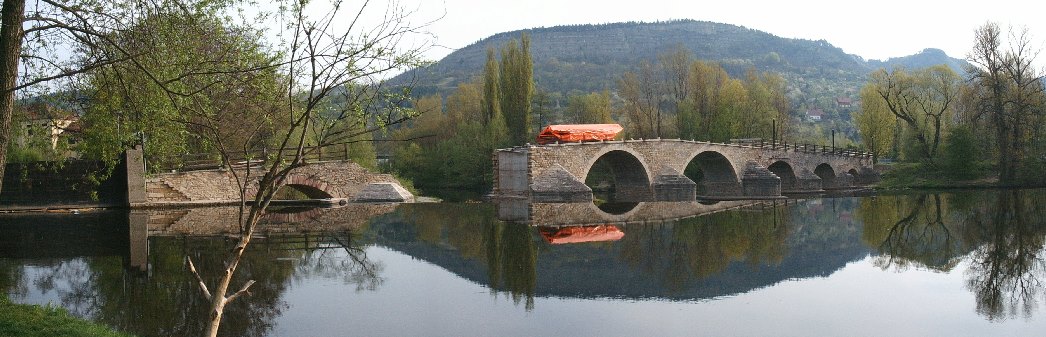
1491-1744, wurde nach Ihrem Wiederaufbau am 03.10.2004 eingeweiht
11.70 m
142.50 m
5.10 m
A map is loading
Timeline
Loading timeline...
Tags
Loading tags ...
Editing is available for members (midgr >= 6).
News
Lade Nachrichten ... loading news ...
Links
Loading links ...
Literature
Loading literature ...
Collectibles
Loading collectibles ...
Videos
Loading videos ...
Documents
Loading documents ...
0.00 m
0.00 m
0.00 m2
in operation
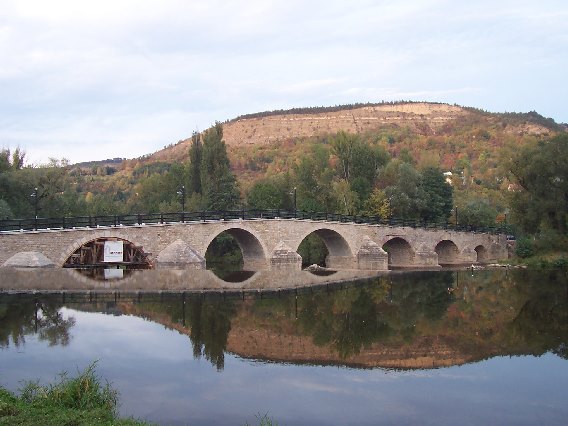
Information by Heidi Zahir:<br><br>A stone bridge over the river Saale arches again today in the South of Jena, between the villages of Altlobeda and Burgau. The River had here sought to a width of 300 m between two rock Spurs his way. Of in the 18th century that halls divided into three arms and their location relatively freely also changed management officials Mr Goethe we know. The known trade routes as far as possible went to this humid lowland. But the two places were economically connected and the Lobedaer officio after Burgau had to also reach the local mill. They used it probably a Ford that had already been laid by the formerly there who settled Slavs. The claims grew, and the transition has been secured in the 15th century with stick dams and a wooden bridge. From 1491 was demonstrably worked on the construction of a stone arch bridge. It followed a long and troubled construction. Until 1744, the bridge will be completed in its full length with parapet and road surface. The long construction period is due of only local significance and the limited financial means of the sovereigns. A large part of the services is done as a service, including the delivery of stone material. Deep lanes prove a long direct navigation of the arched bridge, which was certainly not easy. Flood damage and devastation in the thirty years war fall into this time. then, in 1828 the bridge expands by breaking off the parapet and outward pushes the railing with Corbels. In this design, we know the building. Burgauer page developed a small urban centre with mill, smithy, and restaurants. It was and still is a popular tourist destination.<br><br>in 1912, the Carl Zeiss company demolished two arches of the bridge Jena during the construction of a hydroelectric power station on the adjacent mill site and replaced it with a contactor for the mill race. The power plant has not interrupted its operation to date and represents a monument to itself.<br><br>The old Saale bridge Jena-Burgau was a stone arch bridge with 11 arches in its greatest extent. Construction material was limestone, as well as some sandstone used for the most part of the Jenaer Terabratel-. We find in the vaults and on selected details wrought stone. The total length of the bridge is today 142.50 m with a width of 5.10 m. The six still existing and three new vaults have spans between 4.20 and 11.70 m. A bent about 30 degrees to the North and 44.20 m long ramp is located on the eastern shore. It contains the arches 8 and 9, which serve the rapid dissipation of the flood. The superelevation of the bridge is over 2.5 m whether free ride was, so that only in the middle of the bridge turned out.<br><br>The last century includes a dark chapter for this bridge. In April 1945, that Americans were already in Jena, space, still three arches of the bridge were blown up. In 1946 the city by means of steel girders and wooden planks joined the three openings. The use of the bridge was limited but just waiting for pedestrians and cyclists. In the North, a new bridge for the tram and car traffic was already created. During GDR times, there were many activities to the bridge, which included small renovations and demolition applications. The demolition applications, as well as major renovation failed due to the lack resources and opportunities. The fate of the bridge seemed sealed, 1982 drove a upstream located pontoon flood against the temporary closure of the bridge and destroyed it. At the urging of local residents, the city north of the ruin built a temporary bridge. The old, historic bridge moved out of sight of the public interest. Medium for a conversation or even repair could be not provided. The decline of this monument lasted until 1990. After the turn, secured the Thuringia Office in 1990 and 1991 the sole and the Foundation of the bridge piers and urged the city as construction, to meet their maintenance obligations. For the city, the bridge was although now the only one of its kind in the area East Thuringia, not the most important. Move better in the consciousness of the people and the Administration to the bridge, the bridge club for the preservation of the old Saale bridge of Jena - Burgau was founded 1991. He unfolded a social life at the bridgehead and was also getting better ear in the Administration and the economy. In 1998, a new partner in the boat came with the federal employment agency. Since that time, the bridge piece by piece with funding the city of Jena, the Labour Office and the bridge club was renovated.<br><br>The efforts and the tenacity paid off. On the 03.10.2004 the Mayor of partner cities could release the bridge Erlangen and Jena for the traffic. With a large Festival, the population took the new old Saale bridge in possession. The existing building is designed as driven bicycle bridge in accordance with DIN 1072 with a traffic load of 5 KN / M. The gradient was able with the help of
of the portfolio should be determined. The old sole made of limestone slabs are not received dispute. A massive soles paving between piles replaced it today. All existing parts were preserved. The bridge cleared and filled with lightweight concrete. On the filling concrete, a seal came to ZTV Bel part 1 with a protective layer of mastic asphalt. A limestone pavement, Oberdorlaer Muschelkal makes the ceiling finally in ballast chippings with a descent to the bridge axis. The closure of the blown-up arches was planned originally with a modern wood construction, which allowed a later stone single Vault. With a donation, a donor Association the claim after the closure of the original stone. A new planning corresponded to the wish of the donor. In the framework of construction resulted in difficulties in the resourcing of the Natursteinmateriales and the costs threatened to run out of control. In a new rescheduling a steel concrete vault with Natursteineckquaderung was provided, which was also carried out for all three arches.<br><br>The wooden railing with a new height of 1.20 m retained the historic, horizontal bar again, and first a street lighting could be incorporated into the railing. The railing posts to protect as earlier impact bollard. The arches are illuminated. In almost 14 construction this bridge could be rebuilt for almost €2.0 million.
 Use only on request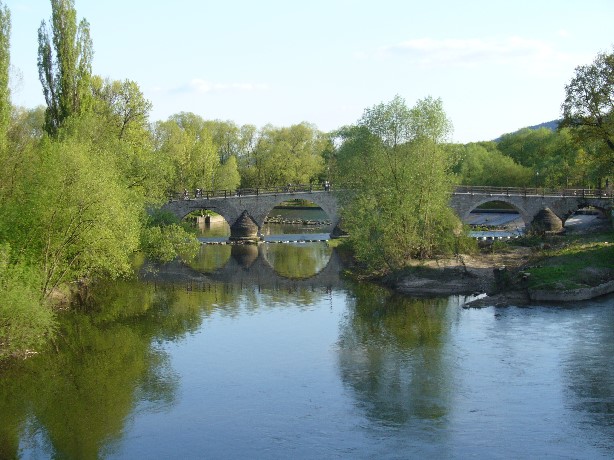
 No other use permitted