BAS 62322
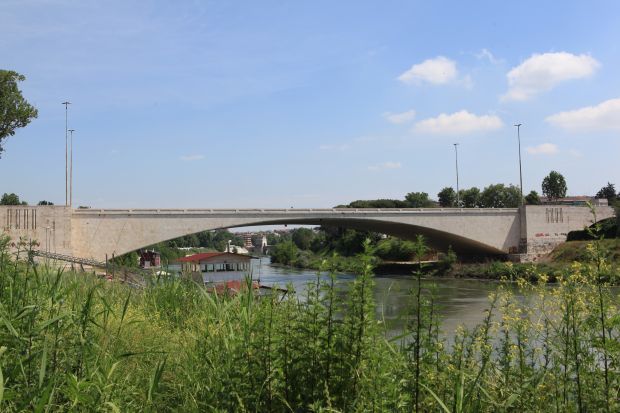
Ponte Duca D'Aosta
13.05.2012
© Frank Sellke / brueckenweb.de
 Use in accordance with the terms and conditions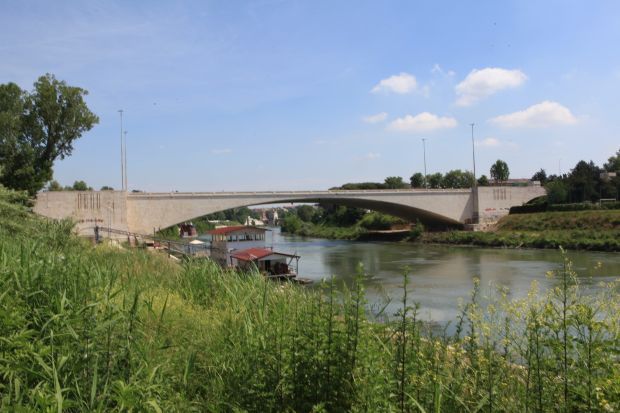
13.05.2012
© Frank Sellke / brueckenweb.de
Use in accordance with the terms and conditions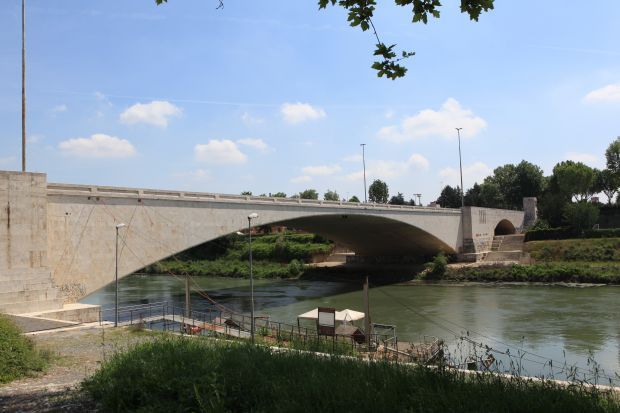
13.05.2012
© Frank Sellke / brueckenweb.de
Use in accordance with the terms and conditionsItaly
Latium
Rom
Tiber
Street
arch bridge, arch under the roadway
Concrete
1939-1942
0.00 m
220.00 m
30.00 m
0.00 m
0.00 m
0.00 m2
in operation
Wikipedia:<br>The stone arch bridge has a length of 220 metres and a width of 30 meters and is equipped with three arches. The Middle arch overcomes the navigable River Tiber at normal water level. Left and right are the arches, which are intended to ensure the flow of water at high tide. The bridge is also a head of the shipping line on the Tiber.

It consists entirely of stone, mostly Carrara marble; only individual parts, such as the cover of the parapet and the stairs that lead down to the Tiber River, are made of Roman travertine of the nearby Tivoli. There are pylons with half sculptural reliefs on the bridgeheads.

The bridge is considered to be one of the most elegant bridges of Rome. It is an integral part of the Foro Italico and is located on an axis with the Mussolini obelisk and the ball fountain in front of the Olympic Stadium of Rome. The Ponte Duca D'Aosta is also an example of building in the Italian fascism by Mussolini, who wanted to conceal the bad economic situation in Italy and wanted to build with the Foro Italico on ancient traditions of Rome by bulk orders.

It was built by the Archikten Vincenzo Fasolo from 1939 to 1942.

The name of the bridge Filiberto goes back Duca D'Aosta to Emanuele, an Italian General in the first world war, which despite the defeat at the battle of Caporetto upright held the Italian front on the Piave River and later occupied parts of Friuli.
Karte wird geladen …