BAS 84
Kennedy bridge
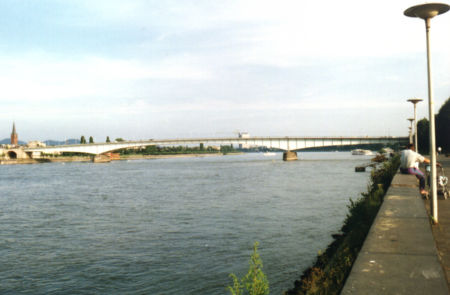
© Frank Sellke / brueckenweb.de
 Use in accordance with the terms and conditions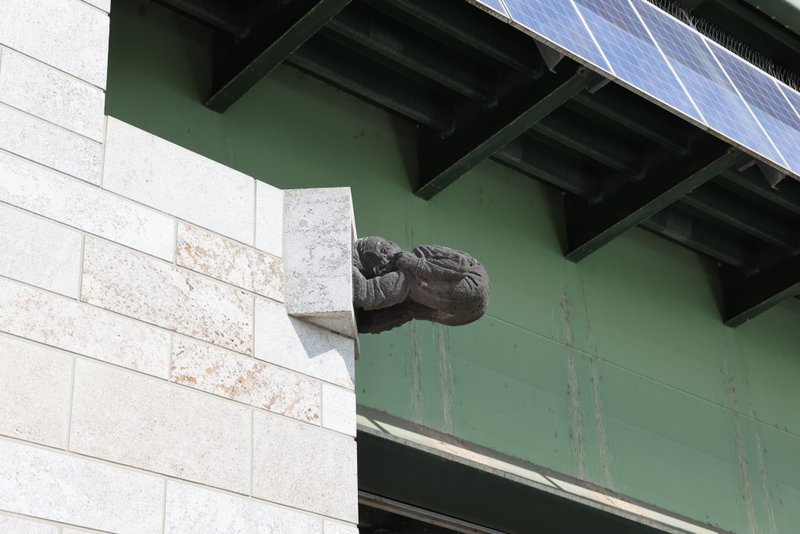
12.09.2026
© brueckenweb.de / Frank Sellke
Use in accordance with the terms and conditions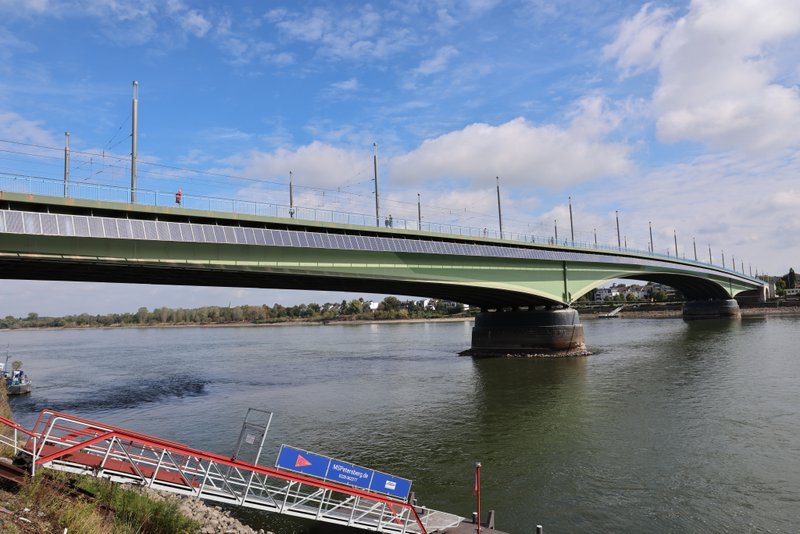
12.09.2026
© brueckenweb.de / Frank Sellke
Use in accordance with the terms and conditionsGermany
North Rhine-Westphalia
Bonn
Rhine Dezember 654.9
Rhine
Cove beam and girder bridge
Steel
1949
195.00 m
395.00 m
18.00 m
0.00 m
0.00 m
0.00 m2
in operation
Press Department of the city of Bonn:<br><bR>The history of the Kennedy bridge<br><bR>IB - the Kennedy bridge is the first link between the two Rhine. Already in the 17th century was a regular ferry service in this area. Since 1889, the former City of Bonn planned to build a bridge to the right bank of the Rhine. The ever-increasing volume of traffic between two banks could no longer be handled through the existing ferry service. Even disabilities were added as through high and low water, fog, ice or darkness. in 1894 the Bonner took then with the community of Vilich (only since 1922 the term "Beuel" is commonly used) on talks. But it was still a long way up to the solemn inauguration of the first Rhine bridge at this point on December 17, 1898. First, a dispute had to be resolved. Because the "Fähraktiengesellschaft", so the community of so-called "Fährbeerbten", who owned the Fährrechte in this section of the Rhine, feared certainly right to greater financial losses. Only on 13 may 1896 the city of Bonn and the "Fährbeerbten" on a severance pay of 190,000 marks agreed and another 30,000 marks compensation.<br><bR>But a pre-construction - at that time this was no different than it is today – it was to ensure the financing. Negotiations with various banks were unsuccessful. Reich, State and province waved off. In 1884, the Council of the city of Bonn decided to raise the cost of the building itself.<br><bR>According to first estimates, the building should cost DM 2.58 million. The Bonner now wishing that Vilich should engage the community with 10 percent. However, the Vilicher Council offered only the not quite sufficient sum of 2,500 marks. Namely, the Beueler feared that the estimated construction costs would be exceeded by far. The Bonner rejected the modest participation and it came after a long wrangling to the compromise that the right bank should provide the grounds for the ramp free and build a road on their side. Because the Rhine bridge at that time ended Beueler suspended. The Centre Beuels is located in the direction of Vilich then next. Therefore, the Beueler had more interest of course that the bridge closer to her Center. But Bonn prevailed as the stronger partner.<br><bR>The Bonner wanted their business market over the former square square, the area of today's Bertha by-Suttner-Platz and the Berliner Freiheit combining cost-effective for them.<br><bR>

<u>Largest and most beautiful bridge over the Rhine</u><br><bR>A competition for the bridge was held in July 1895. The Gutehoffnungshütte Oberhausen received the 1st prize of 8000 mark with the firm R. Schneider in Berlin and the architect Bruno Möhring. The winners were also commissioned to build the bridge. Foundation work began in April 1896, 33 months later the bridge for the traffic could be released. With a span of the main opening of 188 meters she was at that time largest and their location in front of the picturesque Siebengebirge most beautiful of the existing Rhine bridges at all.<br><bR>Financing the costs finally 4 million marks was in the way of a public bond. From the outset, all passers had to pay a toll. This was first in 1927 for cars, in 1938 for all users.<br><bR>Also at the Rhine bridge, passed the Nazi left its mark. She was renamed Klaus-Clemens bridge after a Bonn Storm trooper. And finally, she was blown against 20: 20 clock, just two months before the end of World War II, on March 8, 1945 on the orders of the German military. The German troops had retreated before the advancing Allied battle units across the Rhine. But not really held the allies for the demolition.<br><bR>Quickly after the destruction again ferries and boats, sometimes even wagon ferries operated between North Rhine-Westphalia and Bonn.<br><bR>On August 29, 1945, the Bonn construction Committee dealt with the construction of a new bridge, in March 1946, the plans were available. The work that steel companies performed in Rheinhausen as well as green and Bilfinger began in September 1946. The bridge on the almost unbroken power and country columns was built in 36 months. The new Rhine bridge was opened on November 12, 1949.<br><bR>On December 2, 1963, only ten days after the assassination of U.S. President John F. Kennedy on November 22, 1963, the Kennedy bridge bridge was renamed in the presence of U.S. Ambassador George McGhee and the former Bonn Mayor Dr. Wilhelm Daniels
Karte wird geladen …