The Bernina Railway is one of the most fascinating mountain railways in the world - a masterpiece of engineering that winds like a silver ribbon through the breathtaking Alpine landscape. It has been connecting Switzerland and Italy for over 110 years, overcoming not only the Bernina Pass, but also seemingly insurmountable obstacles: deep gorges, steep rock faces and extreme weather conditions. The bridges on the route in particular are still symbols of courage, creativity and the unshakable will to conquer nature - without destroying it.
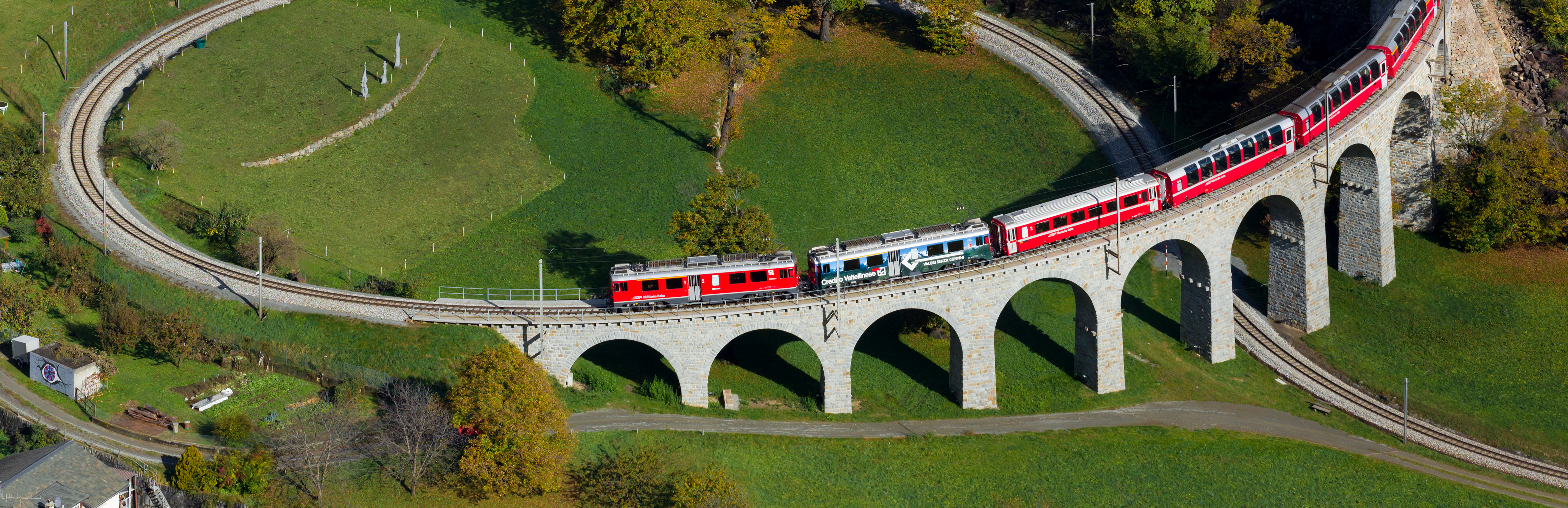
The construction of the Bernina Railway between 1906 and 1910 was a true adventure. The workers, many of them Italian guest workers, faced challenges that puzzled even experienced engineers. The route had to cope with gradients of up to 70 per mille - a gradient that is extreme for a normal railway, but seemed almost impossible for an adhesion railway (i.e. a railway without a gear drive). But the planners found an ingenious solution: They built tight curves and spiral viaducts, like the famous Brusio Viaduct, which spirals up the mountain like a spiral staircase. This enabled the railway to overcome the gradient without overloading the trains.
But that was just the beginning. Nature itself seemed to conspire against the project. Construction workers struggled with icy winters in which temperatures dropped to minus 30 degrees, sudden snowstorms that buried entire construction sites, and landslides that destroyed the sections that had already been built. Transporting materials such as steel beams, concrete and wood was a logistical miracle: there were no roads, no cranes, no modern machinery. Everything had to be brought to the construction sites by horse-drawn carts, mules or by hand. The workers lived in simple barracks, often isolated from the rest of the world for weeks, and worked under conditions that would be unimaginable today.
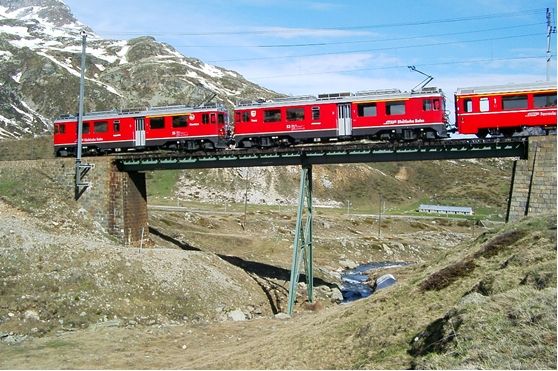
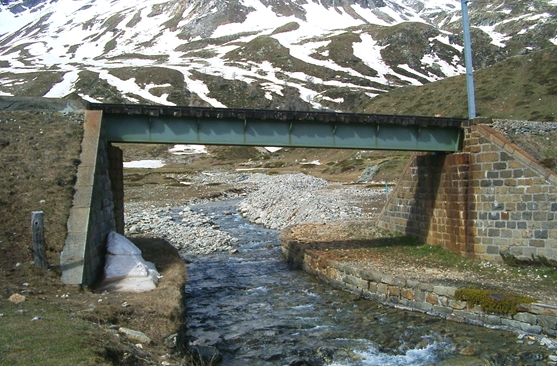
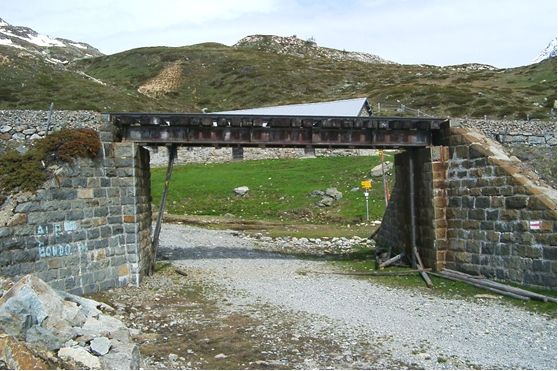
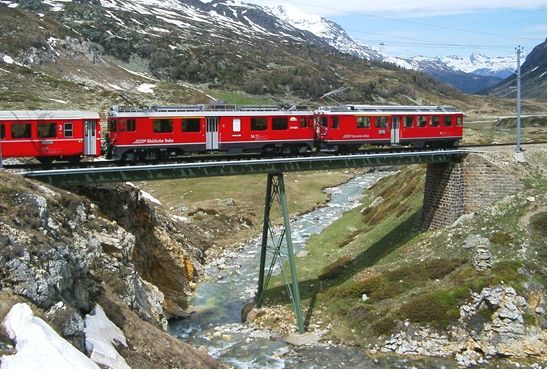
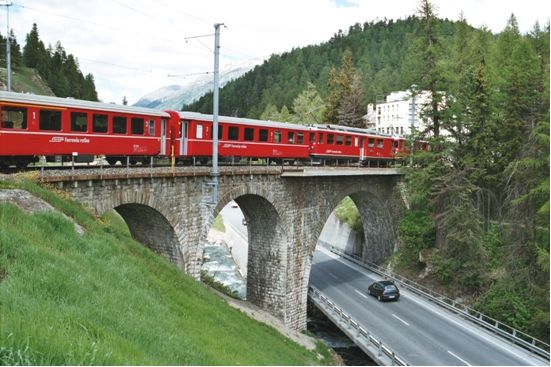
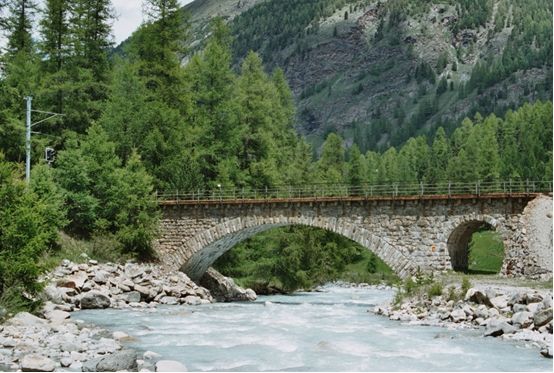
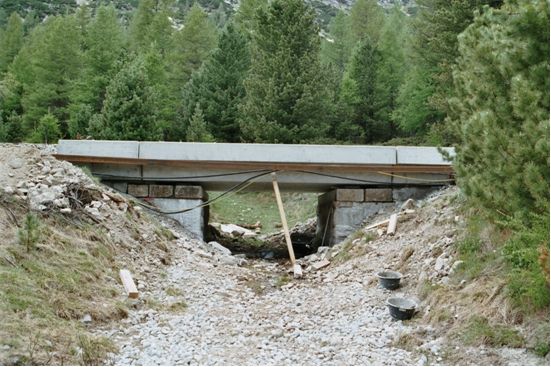
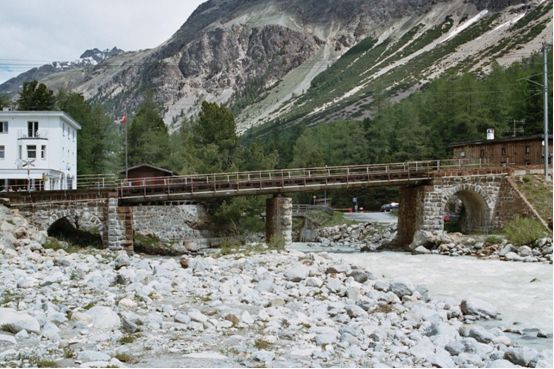
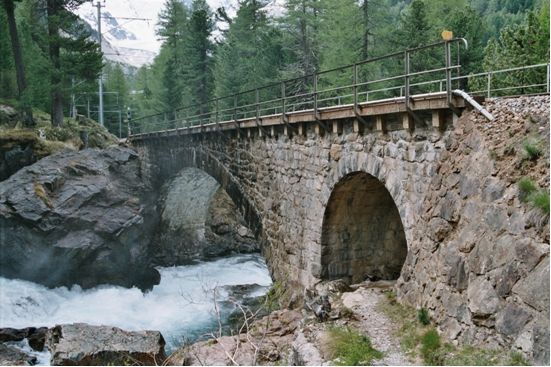
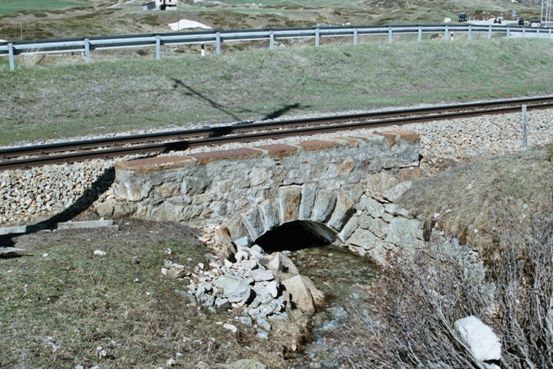
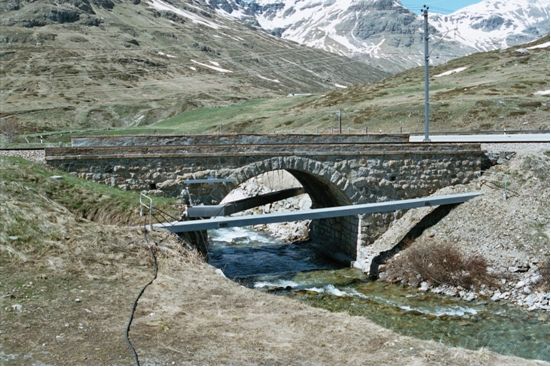
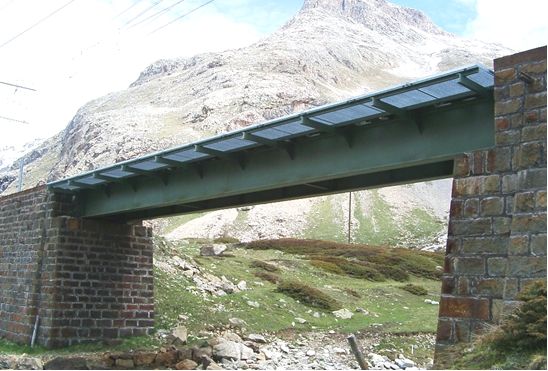
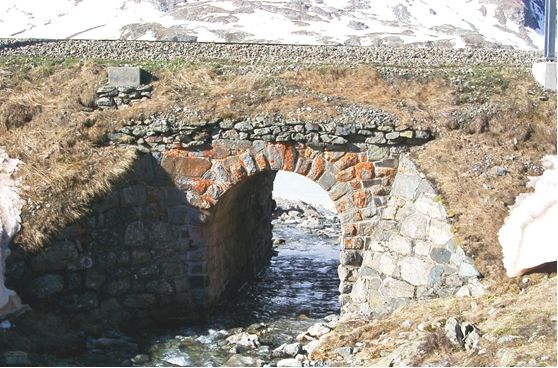
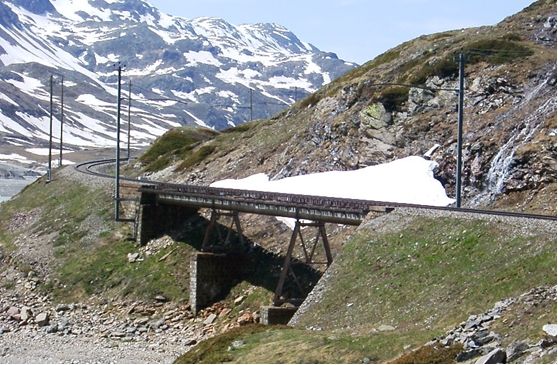
The bridges posed a particular challenge—each one a small work of art in its own right.. The engineers relied on pendulum pier bridges, a relatively new technology at the time. These bridges are not rigid, but can move easily when the wind blows or the ground gives way. One of the most famous is the “Bridge Am See” near the Ospizio Bernina. It is the longest of its kind on the route and towers like a proud monument above the lake of the same name. Their elegant design and robust construction make them one of the train's photo subjects.
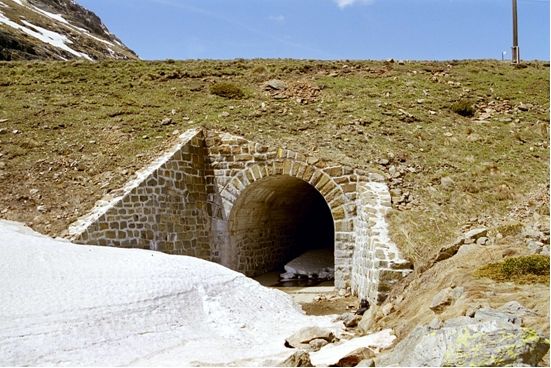
But not only the bridges, the tunnels were also a challenge. 55 of them wind their way through the rock, some so long that the workers had to stay in the dark for weeks during construction. The heat in the tunnels was often unbearable, and the danger of collapsing walls or toxic gases lurked everywhere. Nevertheless, the workers persevered, driven by the prospect of one day completing one of the most modern railways in the world.
When the Bernina Railway finally opened in 1910, it was not only an engineering triumph, but also a symbol of progress and connection. The line was electrified - a rarity at the time - and the trains negotiated the extreme gradients with an ease that silenced critics. The bridges and viaducts, which took weeks of manual work to create, are still standing today. They have survived storms, avalanches and decades of operation and speak silently of a time when people still moved mountains with their bare hands.
Today the Bernina Railway is not just a means of transport, but a UNESCO World Heritage Site. The route between St. Moritz and Tirano is considered one of the most beautiful rail journeys in the world - a mixture of technical masterpieces and breathtaking nature. The bridges that were once considered a necessary evil have now become icons. They not only connect two countries, but also the past with the present. And they remind us that true innovation is not about conquering nature, but working with it.