The Rhine-Herne Canal: A Technical and Economic Necessity for the Ruhr Area
The Rhine-Herne Canal—today one of Germany’s most important artificial waterways—is a product of industrialization. Its construction history is inextricably linked to the economic and logistical challenges facing the Ruhr area in the late 19th and early 20th centuries—a region rapidly transforming from an agrarian landscape into one of Europe’s major industrial hubs.
The Context: Why the Canal Had to Be Built
1. The Industrial Revolution and the Need for Transport Routes
By the mid-19th century, the Ruhr area had become the epicenter of the Industrial Revolution in Germany. Coal, steel, and later chemical products drove the economy, yet transporting these goods posed a major challenge. Existing transport routes—roads, railway lines, and natural rivers like the Rhine and the Emscher—were insufficient to efficiently move the growing volumes of raw materials and finished goods.
Rail transport was fast but expensive and not suitable for all types of cargo.
Natural rivers like the Ruhr were important but not navigable along their entire length and were often overburdened.
Roads were unsuitable for heavy-load transport and suffered from poor infrastructure.
Consequently, an artificial waterway that directly connected industrial centers and enabled continuous shipping became an economic necessity.
2. The Vision of a Continuous Canal Network
As early as the 19th century, plans existed for a West German canal network designed to link the industrial regions of the Ruhr, the Saarland, and the Rhineland. The Rhine-Herne Canal was a key component of this vision. It was intended to:
Connect the Rhine (near Duisburg) with the Port of Dortmund, thereby linking to the coal-mining region.
Utilize the Emscher river valley to reduce construction costs. Enabling a continuous shipping route from the North Sea to the Ruhr region.
The idea was not new: initial proposals for canals in the Ruhr region had already been made in the 17th and 18th centuries, but it was not until industrialization that the plans became concrete and financially viable.
3. Political and economic support
The construction of the canal was driven forward significantly by the Prussian government and the industrial sector. The coal-mining areas in the eastern Ruhr region (e.g., Dortmund, Herne, Castrop-Rauxel), in particular, pushed for better connectivity to transport their products to consumers and ports quickly and cost-effectively. The steel industry in Oberhausen and Duisburg also benefited from a direct link to the Rhine, which was already one of Europe's most important trade routes.
Construction history: Challenges and solutions
1. Planning and route alignment
Planning for the canal began in the 1890s. The choice of route was crucial:
The canal was designed to run as straight as possible to save on construction costs.
The Emscher valley offered a natural route that required only minimal excavation.
Locks were incorporated to overcome changes in elevation. The Rhine-Herne Canal has a total of six locks that compensate for a height difference of approximately 38 meters.
Construction work began in 1906 and lasted until 1914. Thousands of workers were involved, including many Poles, Italians, and Belgians recruited as guest workers. Working conditions were harsh; workers often lived in simple barrack camps along the construction site.
2. Technical challenges
Building the canal was a pioneering engineering feat:
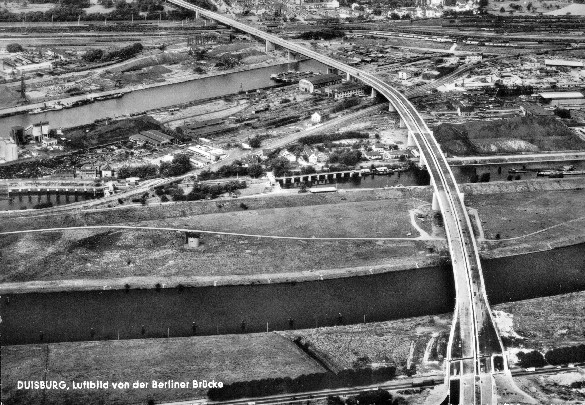
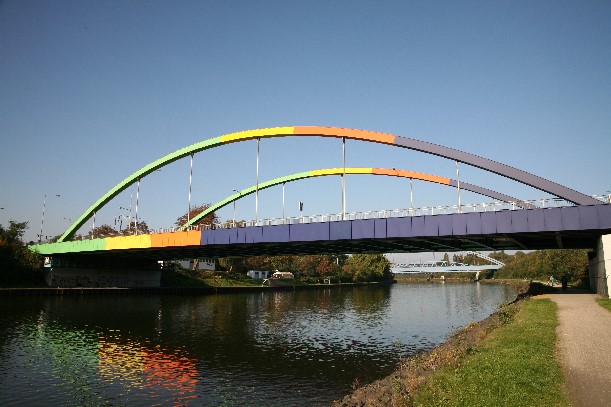
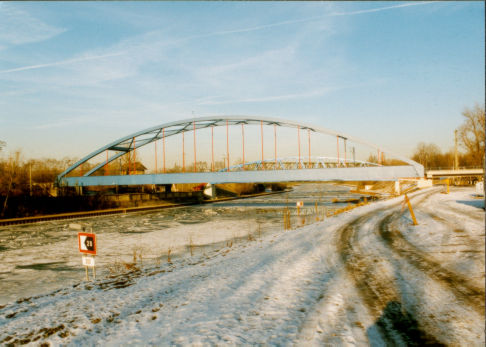
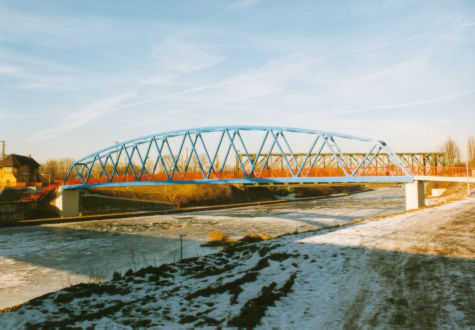
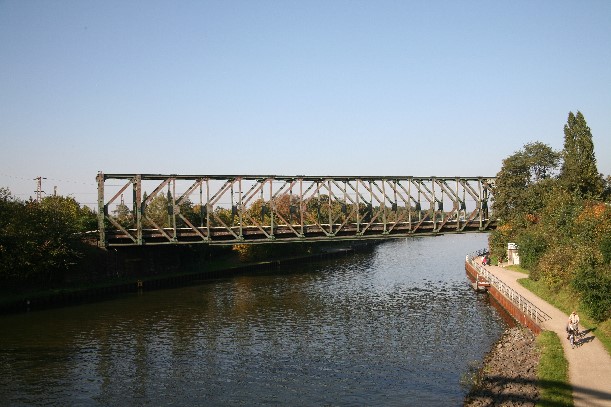
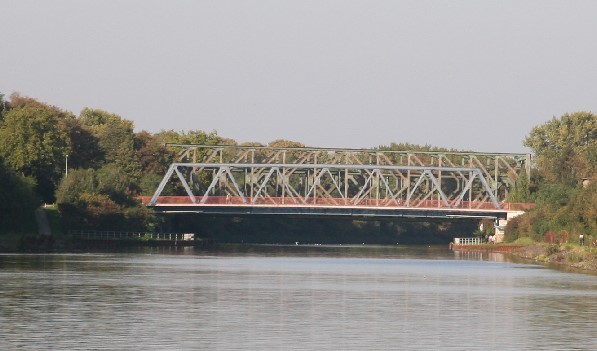
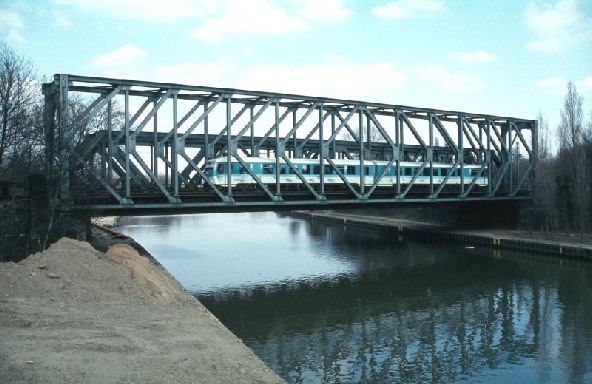
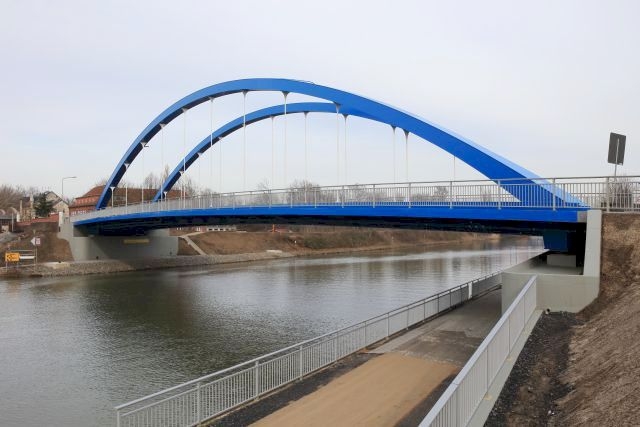
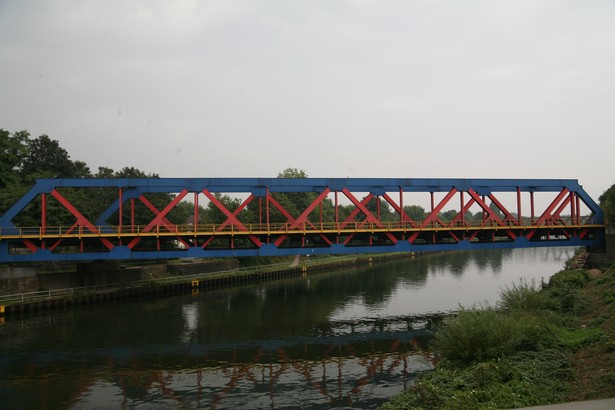
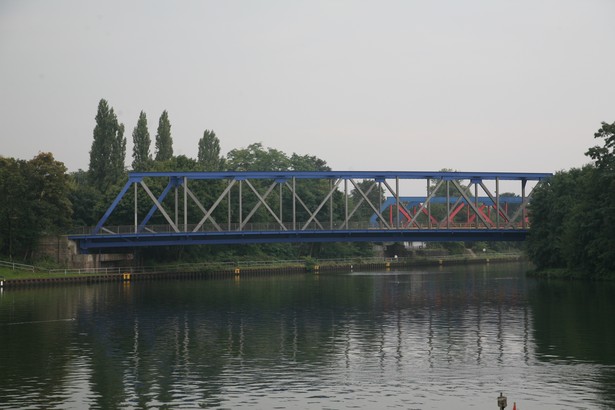
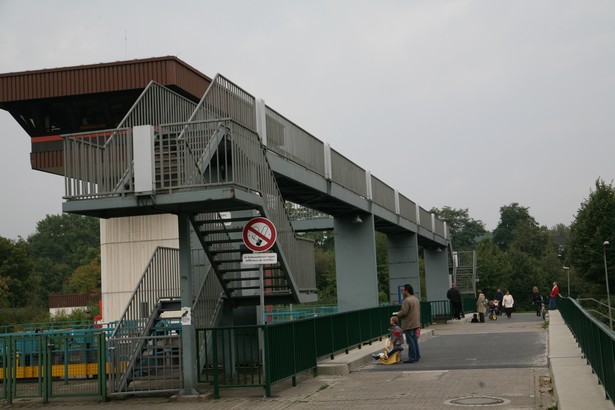
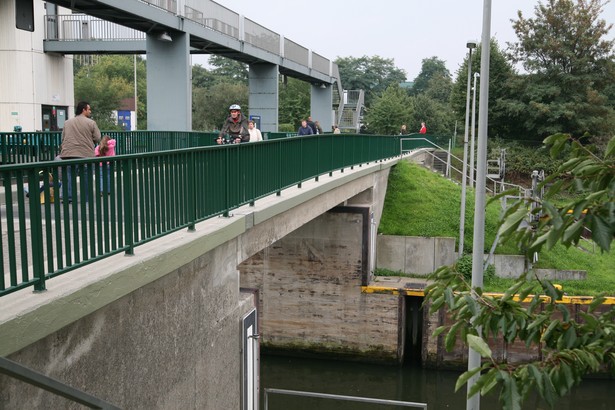
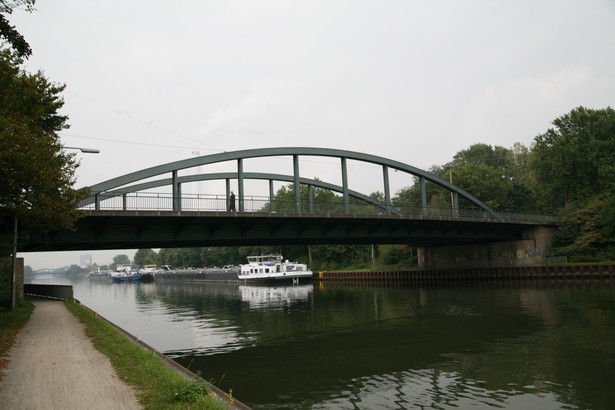
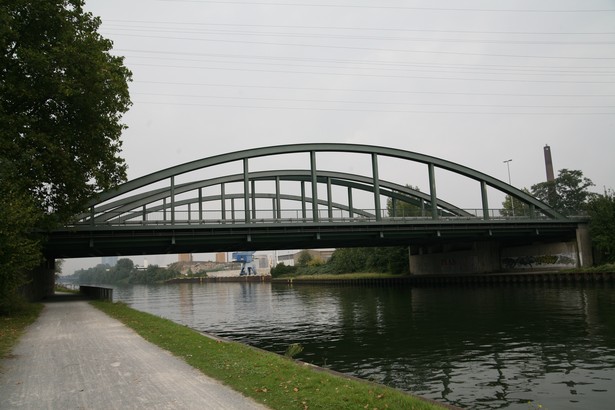
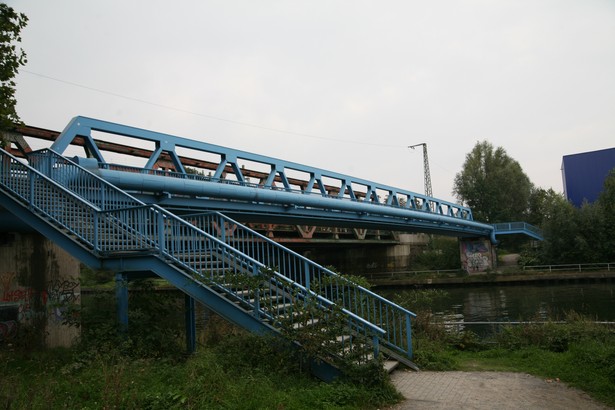
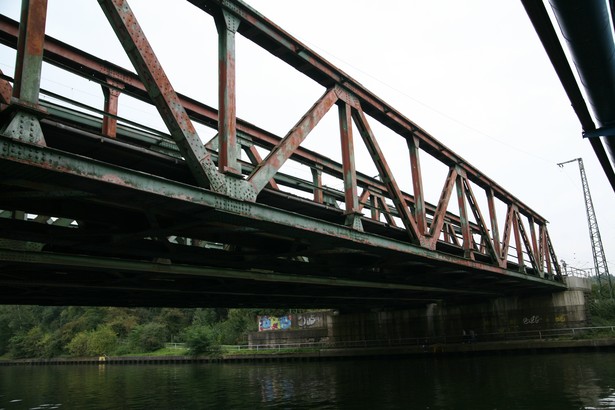
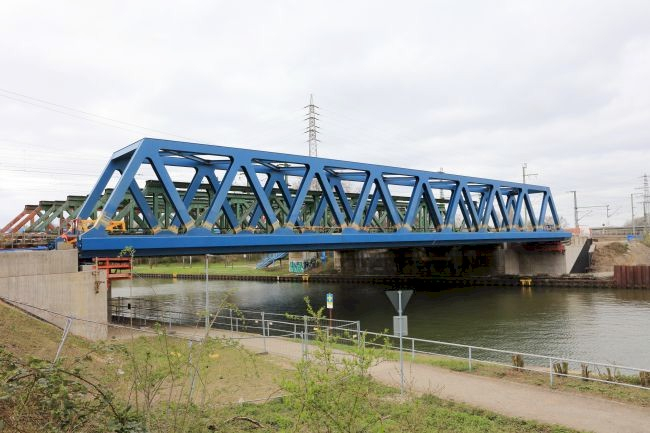
Excavation and earthworks: Over 20 million cubic meters of earth had to be moved—one of the largest earthmoving projects in Germany at the time. Bridges and culverts: In addition to the more than 110 bridges, railway and road underpasses had to be built to avoid disrupting traffic.
Groundwater issues: In the Emscher area, the subsoil was highly water-saturated. To prevent the canal from leaking, cut-off walls made of clay—and later concrete—were installed.
Lock construction: The locks had to be sized to accommodate large coal and ore vessels. The largest lock, Herne-Ost, has a chamber length of 190 meters and a width of 12 meters.
3. Financing and costs
Construction costs amounted to around 120 million marks (approximately 600 million euros today). The project was financed by:
Imperial funds (Prussia was part of the German Empire at the time).
State funds from the Kingdom of Prussia.
Municipal contributions from the towns along the route.
Private capital, particularly from industrial companies that benefited directly from the improved connectivity.
The role of the canal in the economic boom of the Ruhr region
1. Transport Revolution and Industrialization
The completion of the canal in 1914 marked the beginning of a new era for the Ruhr region:
Coal and steel could now be transported cheaply and in large quantities.
Inland shipping became the backbone of the regional economy.
The canal facilitated the establishment of further industries, as raw materials and finished goods could now be delivered and collected cost-effectively.
2. The Canal During World War I and World War II
World War I (1914–1918): The canal was a strategic asset for the wartime economy. Transport capacities were utilized for armaments production, placing a heavy strain on the infrastructure.
World War II (1939–1945): The canal and its bridges became targets of Allied air raids because they supported the German war effort. By the end of the war, large sections of the infrastructure had been destroyed. Reconstruction began as early as 1945 using temporary wooden bridges and stopgap measures—such as ferries—to ensure the population remained supplied.
3. Post-War Period and Modernization
The canal underwent modernization in the 1950s and 1960s to meet growing demands:
Deepening and widening: To accommodate larger vessels, the canal was deepened and widened in several sections.
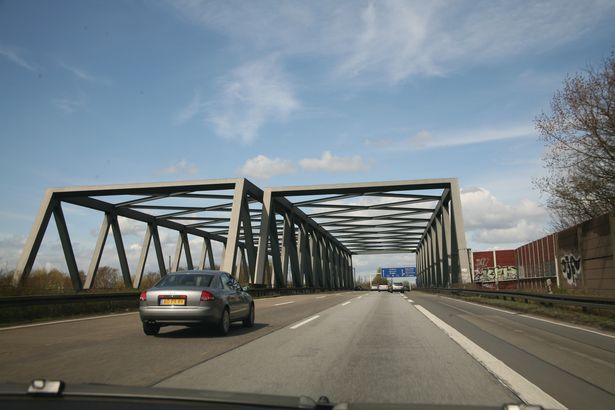
Motorway bridges and modern locks: Rising levels of motorization necessitated the construction of motorway bridges (e.g., for the A 43), while locks were adapted to suit larger ships.
Environmental regulations: From the 1980s onwards, environmental protection measures were implemented, such as the ecological restoration of the Emscher River and the reduction of pollutant discharges.
Modern-Day Significance: From Industrial Canal to Leisure and Economic Artery
Today, the Rhine-Herne Canal is not only a vital waterway for inland shipping but also a symbol of the Ruhr region's structural transformation:
Economic Role: The canal is part of the European waterway network, linking the Ruhr region to the Rhine and the North Sea. Millions of tons of goods—including coal, steel, chemicals, and containers—are transported along it annually.
Leisure and Tourism: The canal banks now serve as popular cycling and hiking paths. Former industrial sites have been transformed into parks and cultural venues (such as the Duisburg-Nord Landscape Park).
Ecological Challenges: The canal faces the challenge of coping with climate change and periods of low water levels. Modern locks and water management systems are used to ensure shipping operations continue even during dry summers.